 thebravewritingcompany@gmail.com
Understanding Yeast Infections
What Is a Yeast Infection?
Let’s start with the basics. A yeast infection, medically known as vaginal candidiasis, is a common condition caused by an overgrowth of a fungus called Candida. Normally, your body maintains a delicate balance between good bacteria and yeast in the vagina. But when that balance is disrupted, yeast can multiply rapidly, leading to infection.
You might be surprised to know that up to 75% of women experience a yeast infection at least once in their lifetime . That means it’s not rare—it’s actually very common. The infection primarily affects the vaginal area and does not directly involve the uterus or ovaries, which are responsible for your menstrual cycle.
Symptoms can range from mild irritation to intense itching and discomfort. While it’s uncomfortable, it’s usually not dangerous and can be treated effectively. However, the confusion begins when a yeast infection happens around the same time as your period.
Common Causes of Yeast Infections
A yeast infection doesn’t just appear randomly. There are specific triggers that can disrupt your vaginal environment. Hormonal changes, especially around your period, play a big role. When estrogen levels fluctuate, it can create the perfect environment for yeast to grow.
Other common causes include:
- Antibiotic use (which kills good bacteria)
- High estrogen levels (from pregnancy or birth control)
- Diabetes or weakened immunity
- Tight or non-breathable clothing
Interestingly, hormonal shifts before menstruation can increase the likelihood of yeast infections. Studies show that many women experience infections right before their period due to these changes .
How the Menstrual Cycle Works
Hormones Behind Your Period
Your menstrual cycle is controlled by a complex interplay of hormones—primarily estrogen and progesterone. These hormones regulate ovulation, uterine lining growth, and ultimately, when your period begins.
Think of your cycle like a well-timed orchestra. If one hormone plays out of tune, the entire rhythm can shift. Ovulation is the key event here. Once ovulation happens, your period usually follows about 14 days later.
What Controls Cycle Timing
Here’s the crucial part: your period depends on ovulation, not vaginal health. If ovulation is delayed, your period will also be delayed. This is why factors like stress, illness, or hormonal imbalance can shift your cycle.
A yeast infection, however, occurs in the vaginal area and doesn’t directly interfere with ovulation. That’s an important distinction to understand before jumping to conclusions.
Can a Yeast Infection Delay Your Period?
What Science Says
Let’s answer the main question clearly:
No, a yeast infection cannot directly delay your period.
Medical experts consistently confirm that yeast infections do not affect the menstrual cycle itself. If your period is late while you have a yeast infection, it’s most likely a coincidence .
Why? Because a yeast infection stays localized in the vaginal area and does not impact the hormonal system or reproductive organs responsible for menstruation.
Why the Confusion Happens
So why do so many people believe there’s a connection?
Because timing can be misleading. Yeast infections often occur right before your period, when hormone levels fluctuate. This overlap makes it feel like one is causing the other.
Also, the discomfort and stress caused by the infection can indirectly affect your body. Stress can influence hormones, which may delay ovulation—and that’s where the confusion begins.
The Real Reasons Your Period Might Be Late
Hormonal Imbalance
Hormones are the real drivers of your cycle. Even small changes in estrogen or progesterone can delay ovulation, which delays your period.
Conditions like PCOS, thyroid disorders, or sudden lifestyle changes can disrupt this balance. Unlike yeast infections, these directly impact your cycle.
Stress and Illness
Your body reacts strongly to stress—both physical and emotional. Lack of sleep, anxiety, or even the discomfort from an infection can increase stress levels.
Research shows that stress can interfere with ovulation, leading to delayed periods . So while a yeast infection itself doesn’t delay your period, the stress it causes might play a role.
Pregnancy and Other Factors
If your period is late, pregnancy should always be considered first if you’re sexually active. Other factors include:
- Sudden weight changes
- Excessive exercise
- Medications
- Travel or lifestyle changes
Connection Between Yeast Infections and Your Cycle
Why Yeast Infections Happen Before Periods
Have you ever noticed itching or irritation just before your period? You’re not alone. Hormonal changes during this time can disrupt the balance of bacteria and yeast in your vagina.
This makes it easier for yeast to grow, leading to infection. In fact, many women experience yeast infections cyclically—around the same time each month .
Hormonal Fluctuations Explained
Estrogen levels rise and fall throughout your cycle. Higher estrogen levels can promote yeast growth, creating an environment where infections thrive.
This explains why yeast infections are more common:
- Before your period
- During pregnancy
- When using hormonal birth control
But again, this is a one-way relationship—your cycle affects yeast infections, not the other way around.
Symptoms of a Yeast Infection
Common Warning Signs
Recognizing the symptoms can help you differentiate between a yeast infection and normal pre-period changes.
Common symptoms include:
- Intense itching and irritation
- Burning sensation during urination
- Thick, white discharge (like cottage cheese)
- Redness and swelling
These symptoms can feel similar to PMS discomfort, which adds to the confusion.
Can Yeast Infection Symptoms Be Confused With Period Signs?
Absolutely. Some yeast infection symptoms overlap with premenstrual symptoms. For example, mild cramping, irritation, and discharge changes can occur before your period.
In some cases, irritation from a yeast infection can even cause slight spotting, which might be mistaken for the start of a period. This overlap makes it easy to misinterpret what’s happening in your body.
When Both Happen Together
It’s entirely possible to have a yeast infection and your period at the same time. In fact, many women experience this combination.
While it’s uncomfortable, it’s not dangerous. However, menstrual products like pads or tampons can sometimes worsen irritation. Choosing breathable, unscented products can help reduce discomfort.
Treatment Options
Medical Treatments
The good news? Yeast infections are highly treatable. Common treatments include:
- Antifungal creams
- Oral medications like fluconazole
- Prescription treatments for severe cases
These treatments usually work within a few days.
Home Remedies
Some people prefer natural remedies, such as:
- Yogurt (for probiotics)
- Coconut oil (for soothing)
- Wearing loose cotton underwear
While helpful, these should not replace medical treatment if symptoms are severe.
Prevention Tips
Preventing yeast infections is often easier than treating them. Simple lifestyle changes can make a big difference:
- Keep the vaginal area dry
- Avoid tight clothing
- Limit sugary foods
- Use mild, unscented hygiene products
Maintaining a healthy balance of bacteria is key.
When to See a Doctor
You should consult a doctor if:
- Symptoms persist after treatment
- You have frequent infections (more than 4 per year)
- You’re unsure if it’s a yeast infection
Early diagnosis ensures proper treatment and avoids complications.
Conclusion
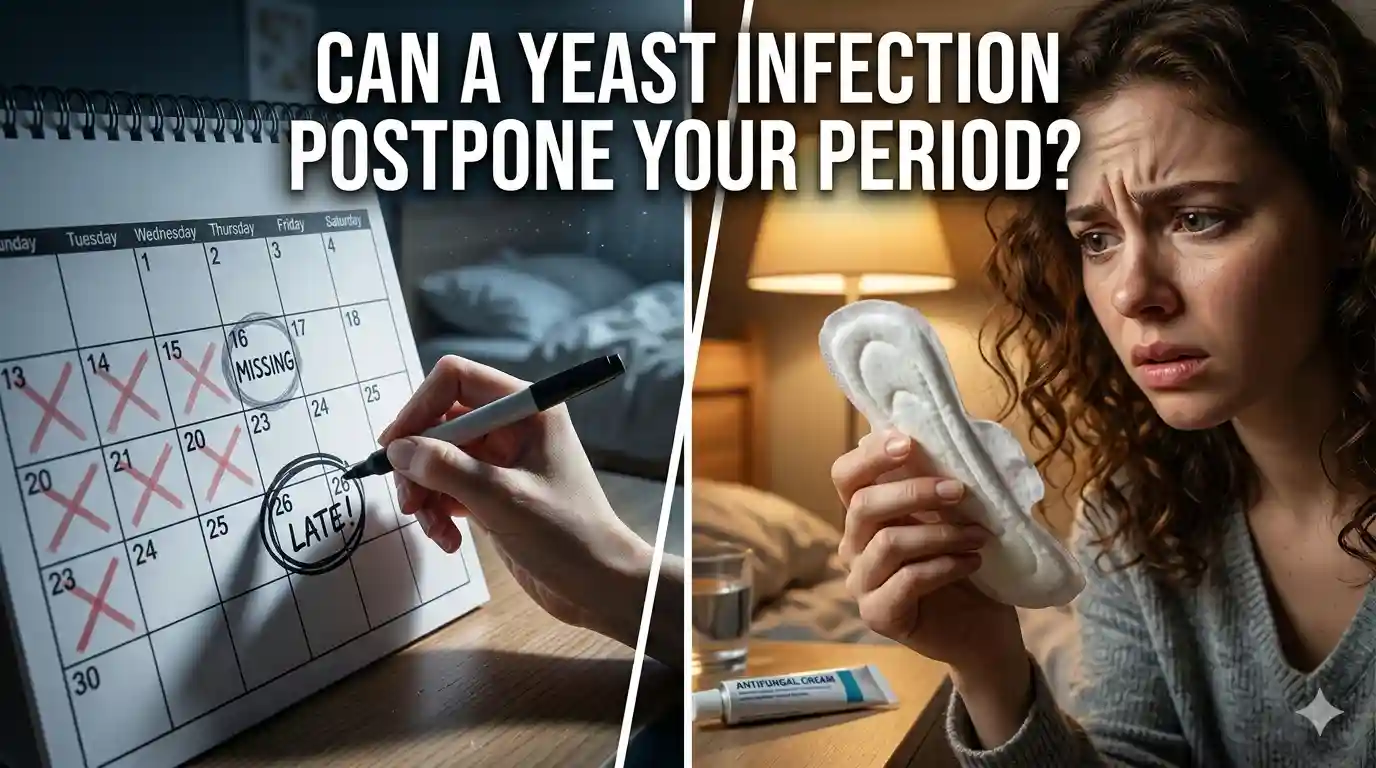
So, can a yeast infection postpone your period? The clear answer is no—it does not directly delay your menstrual cycle. However, the timing of infections, combined with stress and hormonal fluctuations, can create the illusion that it does.
Your body is complex, and multiple factors can influence your cycle. If your period is late, it’s important to look beyond a yeast infection and consider other causes like stress, hormonal imbalance, or pregnancy.
Understanding your body better helps you stay calm, informed, and in control.
FAQs
1. Can a yeast infection stop your period completely?
No, a yeast infection cannot stop your period. It only affects the vaginal area, not the hormonal system controlling menstruation.
2. Why do I get yeast infections before my period?
Hormonal changes before your period can disrupt the balance of bacteria and yeast, making infections more likely.
3. Can stress from a yeast infection delay my period?
Yes, indirectly. Stress can affect hormones and delay ovulation, which may delay your period.
4. Is it normal to have both a yeast infection and period together?
Yes, it’s common and not harmful, though it can be uncomfortable.
5. Should I worry if my period is late and I have a yeast infection?
Not necessarily. But if your period is significantly late, consider pregnancy or consult a doctor.


[…] read more… […]
[…] Read More…. […]
[…] read more […]