Introduction: Can Pregnancy Really Occur During a Period?
When we explore the topic of pregnancy during menstruation, we uncover a subject filled with confusion, myths, and partial truths. Many individuals believe that having intercourse during a menstrual cycle completely eliminates the possibility of conception. However, this assumption is not entirely accurate.
We must understand that pregnancy depends on ovulation timing, sperm survival, and hormonal cycles, not just whether bleeding is occurring. This article presents a comprehensive breakdown of the key factors influencing pregnancy during a period, helping readers make informed decisions with clarity and confidence.
Understanding the Menstrual Cycle and Fertility Window
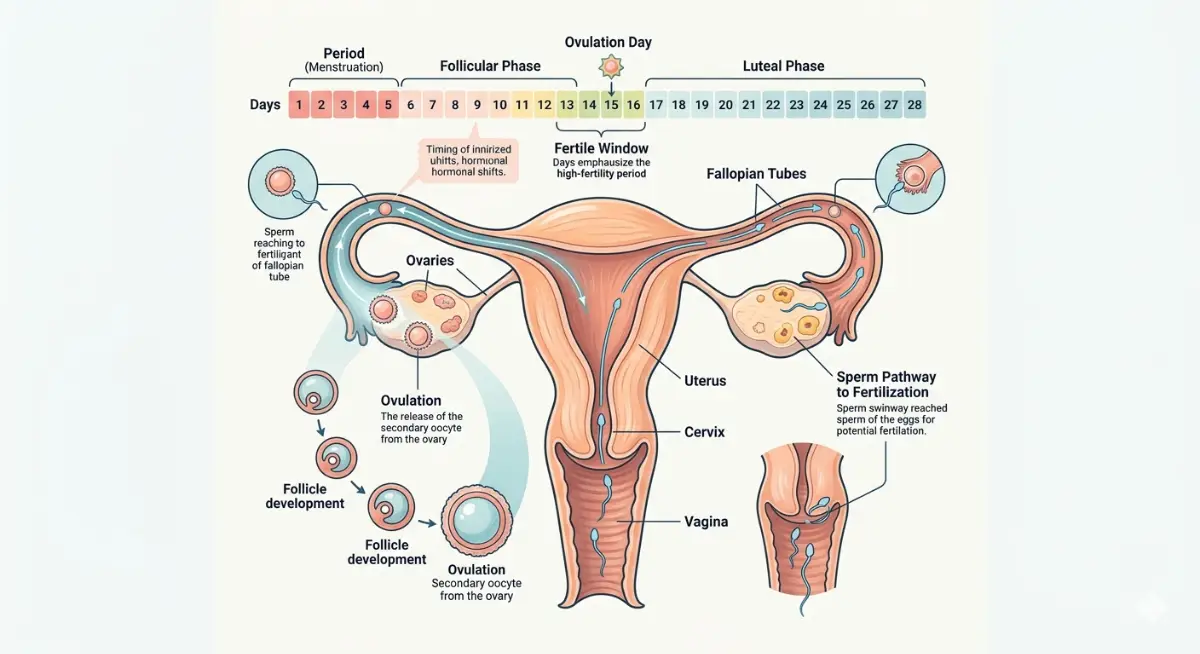
The foundation of understanding pregnancy lies in analyzing the menstrual cycle phases:
- Menstrual Phase (Days 1–5): Shedding of the uterine lining (bleeding phase)
- Follicular Phase (Days 1–13): Egg development begins
- Ovulation (Around Day 14): Release of a mature egg
- Luteal Phase (Days 15–28): Preparation for pregnancy
Although ovulation typically occurs mid-cycle, cycle variations can shift ovulation earlier or later, increasing the chance of pregnancy even during or shortly after a period.
Key Factor #1: Short Menstrual Cycles Increase Risk
Women with short menstrual cycles (21–24 days) are more likely to ovulate soon after their period ends. In such cases:
- Intercourse during the last days of menstruation may coincide with early ovulation
- Sperm present in the reproductive tract can fertilize the egg once ovulation occurs
This makes pregnancy during a period more likely than commonly assumed.
Key Factor #2: Sperm Survival Inside the Body
One of the most critical biological realities is that sperm can survive inside the female reproductive system for up to 5 days under favorable conditions.
This means:
- If intercourse occurs during menstruation
- And ovulation happens within a few days after
Fertilization can still occur, leading to pregnancy.
Key Factor #3: Irregular Periods and Unpredictable Ovulation
Women with irregular menstrual cycles face a higher likelihood of unexpected ovulation. Irregularity may be caused by:
- Hormonal imbalances
- Stress or lifestyle changes
- Medical conditions
When ovulation timing becomes unpredictable, it becomes difficult to determine a “safe” period, making pregnancy during menstruation possible.
Key Factor #4: Misinterpretation of Bleeding
Not all bleeding is a true menstrual period. Some women may experience:
- Ovulation bleeding
- Implantation bleeding
- Hormonal spotting
If intercourse occurs during what appears to be a “period” but is actually ovulation-related bleeding, the chances of pregnancy significantly increase.
Key Factor #5: Early Ovulation
Ovulation does not always occur on day 14. In some cases, especially with hormonal fluctuations:
- Ovulation may occur as early as day 7 or 8
- If intercourse happens toward the end of menstruation, sperm may still be viable
This overlap creates a fertile window during or immediately after the period.
Key Factor #6: Hormonal Imbalances and Lifestyle Influences
Hormonal health plays a major role in fertility. Factors that may alter ovulation include:
- Poor diet and nutrition
- High stress levels
- Lack of sleep
- Intense physical labor or environmental exposure
Such influences can shift ovulation timing, increasing the likelihood of pregnancy even when intercourse occurs during menstruation.
Key Factor #7: Cycle Tracking Errors
Many individuals rely on calendar-based tracking methods, assuming cycles are consistent. However:
- Ovulation prediction is not always precise
- External factors can delay or accelerate cycles
Without accurate tracking tools, such as ovulation kits or hormonal monitoring, it becomes difficult to identify safe days, leading to unexpected pregnancy.
Symptoms That May Indicate Pregnancy After Period Intercourse
If conception occurs, early signs may include:
- Missed or delayed next period
- Breast tenderness
- Fatigue and nausea
- Mild abdominal cramping
- Light spotting (implantation bleeding)
Recognizing these symptoms early allows for timely confirmation through a pregnancy test.
Prevention: Reducing the Risk of Unplanned Pregnancy
To avoid unintended pregnancy, we recommend:
1. Use of Protection
- Condoms provide both pregnancy prevention and protection against infections
2. Hormonal Contraceptives
- Pills, patches, or injections regulate ovulation and reduce risk
3. Emergency Contraception
- Can be used within a limited time after unprotected intercourse
4. Fertility Awareness Methods
- Monitoring basal body temperature and cervical mucus for accuracy
Common Myths About Pregnancy During a Period
Myth 1: Pregnancy Is Impossible During Menstruation
Reality: While less likely, it is not impossible.
Myth 2: Bleeding Means No Ovulation
Reality: Ovulation timing varies; bleeding does not guarantee infertility.
Myth 3: Safe Days Are Fixed
Reality: Fertility windows shift with hormonal and lifestyle changes.
Medical Perspective on Pregnancy Risk During Periods
From a clinical standpoint, the probability of pregnancy during menstruation is low but not zero. Medical experts emphasize:
- The importance of understanding individual cycle patterns
- The unpredictability of ovulation
- The role of sperm longevity
These factors collectively confirm that pregnancy during a period is biologically possible under certain conditions.
When to Consult a Healthcare Professional
We recommend consulting a medical expert if:
- Periods are consistently irregular
- Pregnancy is suspected despite menstruation
- There are unusual bleeding patterns
- Family planning guidance is needed
Professional advice ensures accurate diagnosis and effective reproductive health management.
Conclusion: The Reality Behind Pregnancy During a Period
We conclude that pregnancy during a period, while uncommon, remains a real possibility. The interplay between early ovulation, sperm survival, irregular cycles, and hormonal shifts creates conditions where fertilization can occur even during menstruation.
Understanding these key factors empowers individuals to make informed reproductive choices, avoid misconceptions, and take control of their health with confidence.