 thebravewritingcompany@gmail.com
Menstrual irregularities can be unsettling, especially when your cycle suddenly shifts without warning. One of the most frequently overlooked causes is a vaginal infection. We explore in depth how vaginal infections can affect your menstrual cycle, whether they can delay your period, and what steps you should take to restore balance and protect your reproductive health.
Understanding the Menstrual Cycle and Hormonal Balance
The menstrual cycle is a finely regulated process controlled by hormones such as estrogen and progesterone. Any disruption to this balance can lead to delayed, missed, or irregular periods.
A typical cycle includes:
- Follicular phase
- Ovulation
- Luteal phase
- Menstruation
When internal or external factors interfere with hormonal signaling, the cycle may be altered—sometimes significantly.
Can Vaginal Infections Delay Periods?
Yes, vaginal infections can indirectly delay periods. While infections do not directly stop menstruation, they can trigger physiological stress, inflammation, and hormonal imbalance, all of which may disrupt the menstrual cycle.
Key Reasons Why Periods May Be Delayed:
- Immune system response to infection
- Hormonal imbalance caused by stress or inflammation
- Changes in vaginal pH and microbiome
- Underlying reproductive tract complications
Types of Vaginal Infections That May Affect Your Period
1. Yeast Infection (Candidiasis)
A yeast infection is caused by an overgrowth of Candida fungus. While it primarily affects vaginal discharge and itching, severe or recurrent infections can cause stress in the body, potentially delaying ovulation.
Symptoms:
- Thick, white discharge
- Intense itching
- Burning sensation
2. Bacterial Vaginosis (BV)
BV occurs due to an imbalance of good and bad bacteria in the vagina. This condition can influence vaginal health and may interfere with the natural cycle.
Symptoms:
- Fishy odor
- Thin gray discharge
- Vaginal irritation
3. Sexually Transmitted Infections (STIs)
Infections like chlamydia or gonorrhea can affect reproductive organs and lead to inflammation, which may delay or disrupt menstruation.
Symptoms:
- Pelvic pain
- Abnormal discharge
- Pain during urination or intercourse
4. Pelvic Inflammatory Disease (PID)
Untreated infections can progress to PID, a serious condition affecting the uterus and fallopian tubes, often leading to irregular or missed periods.
How Vaginal Infections Disrupt Hormonal Cycles
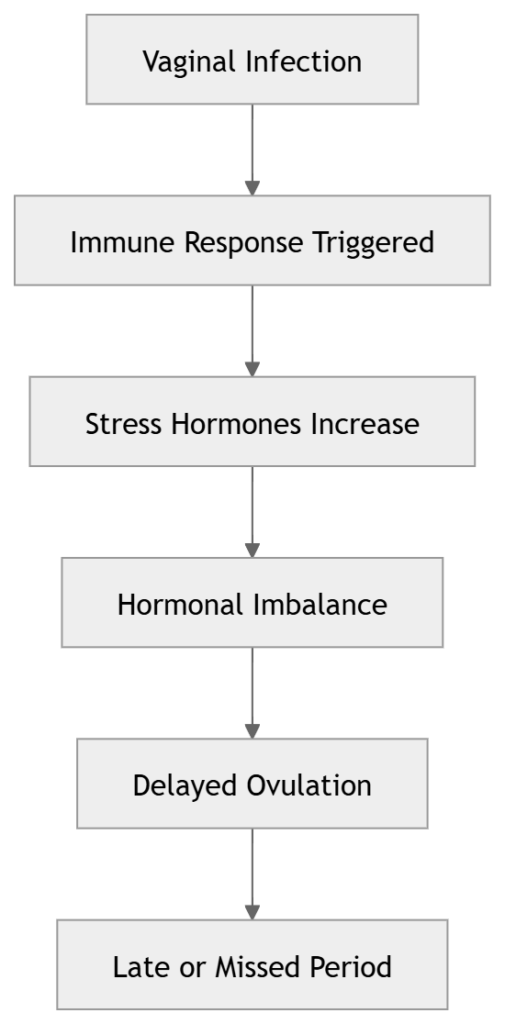
When the body detects an infection, it prioritizes immune response over reproductive processes. This can lead to:
- Delayed ovulation
- Reduced progesterone levels
- Temporary cycle interruption
Hormonal Disruption Flow
Other Factors That May Contribute to Delayed Periods
While infections are a possible cause, they often coexist with other contributing factors:
- Stress and anxiety
- Sudden weight changes
- Poor diet
- Excessive exercise
- Hormonal disorders (like PCOS)
- Medications or antibiotics
Signs Your Delayed Period May Be Linked to Infection
Look for these warning signs:
- Unusual vaginal discharge
- Strong or unpleasant odor
- Itching, burning, or irritation
- Pelvic discomfort
- Pain during urination
If these symptoms appear alongside a delayed period, infection is a likely contributor.
When to Take a Pregnancy Test
If your period is late, pregnancy must always be ruled out first. Take a test if:
- Your period is more than 5–7 days late
- You had unprotected intercourse
- You experience nausea or breast tenderness
Diagnosis and Medical Evaluation
A proper diagnosis is essential. Medical professionals may perform:
- Vaginal swab test
- Urine test
- Pelvic examination
- Blood tests (if hormonal imbalance is suspected)
Effective Treatment Options
1. Antifungal Medications
Used for yeast infections (oral or topical)
2. Antibiotics
Prescribed for bacterial infections and STIs
3. Probiotics
Help restore healthy vaginal flora
4. Lifestyle Adjustments
- Maintain hygiene
- Avoid scented products
- Wear breathable cotton underwear
Home Remedies to Support Recovery
While medical treatment is essential, supportive remedies can help:
- Yogurt (probiotics) to restore balance
- Coconut oil for soothing irritation
- Hydration to support immune response
Preventing Vaginal Infections and Cycle Disruption
We recommend proactive steps to maintain vaginal and hormonal health:
- Practice safe sex
- Maintain proper hygiene
- Avoid overuse of antibiotics
- Eat a balanced diet rich in probiotics
- Manage stress effectively
When to See a Doctor
Seek immediate medical advice if:
- Your period is delayed for more than two cycles
- Symptoms worsen or persist
- You experience severe pelvic pain
- There is abnormal bleeding
Final Thoughts
Vaginal infections can influence your menstrual cycle by disrupting hormonal balance and triggering stress responses in the body. While a delayed period may not always indicate a serious issue, it should never be ignored when accompanied by symptoms of infection. Timely diagnosis and treatment ensure both reproductive health and overall well-being.