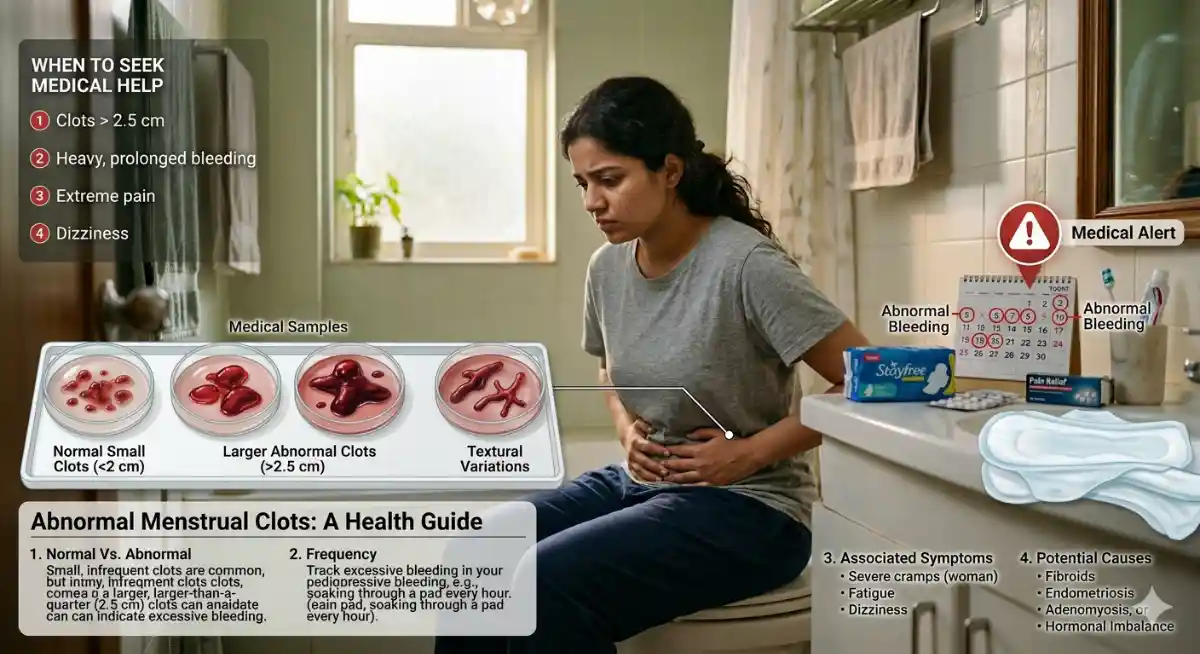
If you’ve ever looked down during your period and noticed large, dark, jelly-like clumps of blood, you’re not alone. Many people experience blood clots during menstruation—but when they become frequent, large, or excessive, it can raise concerns.
So, why are you passing so many blood clots? Is it normal, or could it be a sign of an underlying health issue?
In this comprehensive guide, we’ll break down everything you need to know—from normal clotting to serious conditions like Uterine Fibroids and Endometriosis—in a clear, conversational, and medically accurate way.
What Are Period Blood Clots?
During menstruation, your body sheds the uterine lining (endometrium). This shedding includes blood, tissue, and mucus, which can sometimes clump together.
These clumps are known as menstrual blood clots.
Why Do Clots Form?
Your body releases anticoagulants to prevent menstrual blood from clotting. However, when bleeding is heavy or fast, these anticoagulants can’t keep up—leading to clot formation.
👉 Normal clots are usually:
- Small (pea-sized or smaller)
- Occasional
- Dark red or brown
👉 Abnormal clots may be:
- Larger than a coin (2.5 cm or more)
- Frequent throughout your period
- Accompanied by heavy bleeding or pain
What Is Considered Heavy Menstrual Bleeding?
You may be experiencing heavy menstrual bleeding, medically known as Menorrhagia, if you notice:
- Soaking through a pad/tampon every 1–2 hours
- Passing large clots frequently
- Periods lasting more than 7 days
- Feeling tired or weak (possible anemia)
Common Causes of Excessive Blood Clots
Let’s dive into the most common reasons behind passing many blood clots.
1. Hormonal Imbalance
Hormones like estrogen and progesterone regulate your menstrual cycle. When they’re out of balance, the uterine lining can become too thick, leading to heavier shedding and clotting.
Possible triggers:
- Stress
- Weight changes
- Thyroid issues
- Perimenopause
2. Uterine Fibroids
Uterine Fibroids are one of the most common causes of heavy bleeding and clots.
Symptoms:
- Heavy periods with large clots
- Pelvic pain or pressure
- Frequent urination
Fibroids can increase the size of the uterus, causing more blood accumulation, which results in clot formation.
3. Endometriosis
Endometriosis occurs when tissue similar to the uterine lining grows outside the uterus.
Key signs:
- Severe period pain
- Heavy bleeding with clots
- Pain during intercourse
This condition often leads to irregular and heavy menstrual flow.
4. Adenomyosis
Adenomyosis is a condition where the uterine lining grows into the muscular wall of the uterus.
Symptoms include:
- Enlarged uterus
- Heavy bleeding
- Large blood clots
- Intense cramping
5. Miscarriage
If you’re sexually active and experience sudden heavy bleeding with large clots, it could be an early sign of a miscarriage.
Watch for:
- Severe cramping
- Tissue-like clots
- Sudden heavy bleeding
If you suspect this, seek medical attention immediately.
6. Polycystic Ovary Syndrome (PCOS)
Polycystic Ovary Syndrome can cause irregular ovulation.
How it leads to clots:
- Delayed periods → thicker uterine lining
- Heavier shedding → more clots
7. Blood Clotting Disorders
Conditions like Von Willebrand Disease affect your blood’s ability to clot properly.
Signs:
- Heavy periods since teenage years
- Frequent nosebleeds or easy bruising
8. Intrauterine Device (IUD)
Non-hormonal IUDs (like copper IUDs) can increase menstrual flow, especially in the first few months.
Effects:
- Heavier bleeding
- More noticeable clots
9. Pregnancy-Related Complications
Conditions like ectopic pregnancy or complications can cause abnormal bleeding and clots.
Always consult a doctor if bleeding seems unusual during pregnancy.
10. Medications
Certain medications can influence menstrual flow:
- Blood thinners
- Hormonal treatments
- Emergency contraception
These may lead to heavier bleeding and clot formation.
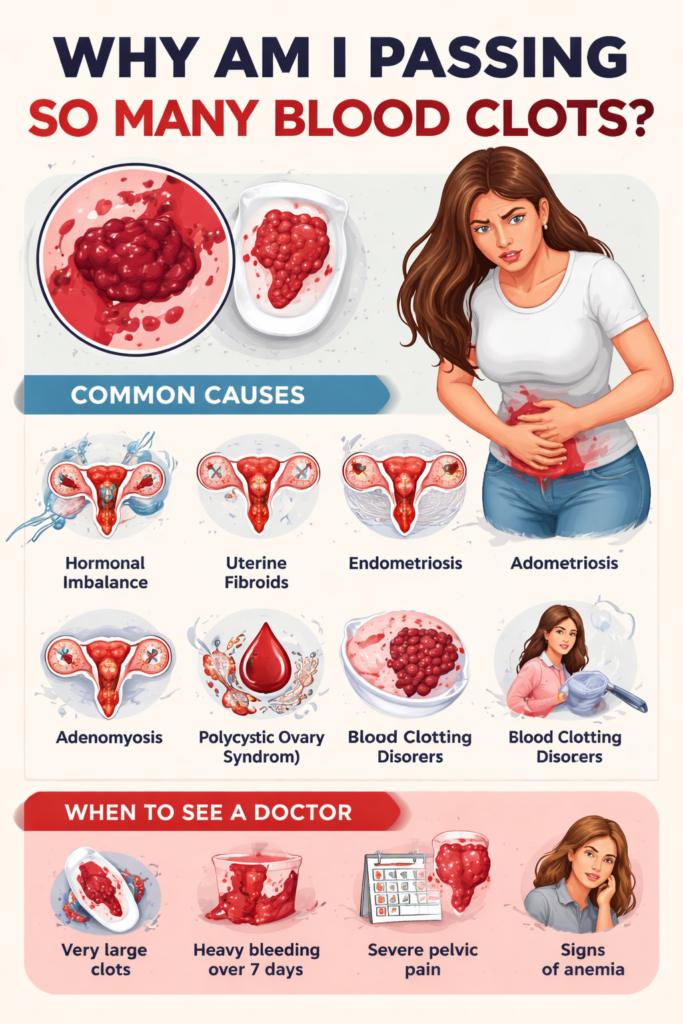
When Should You Be Concerned?
While occasional clots are normal, you should seek medical advice if you experience:
- Clots larger than a golf ball
- Heavy bleeding lasting more than 7 days
- Severe pelvic pain
- Signs of anemia (fatigue, dizziness, pale skin)
- Sudden change in your menstrual pattern
How Are Blood Clots Diagnosed?
Doctors may recommend:
1. Physical Examination
Pelvic exam to check for abnormalities
2. Ultrasound
To detect fibroids or structural issues
3. Blood Tests
To check for anemia or clotting disorders
4. Hormone Testing
To identify imbalances
Treatment Options for Heavy Clots
Treatment depends on the underlying cause. Here are common approaches:
1. Medications
- Hormonal birth control (pills, patches)
- Tranexamic acid (reduces bleeding)
- NSAIDs (reduce pain and flow)
2. Lifestyle Changes
- Maintain a healthy weight
- Manage stress
- Eat iron-rich foods
3. Surgical Options
For severe cases:
- Fibroid removal
- Endometrial ablation
- Hysterectomy (last resort)
Natural Remedies to Reduce Clotting
While not a replacement for medical care, these may help:
- Iron-rich diet (spinach, lentils, red meat)
- Hydration to support circulation
- Exercise to regulate hormones
- Herbal teas (ginger, cinnamon)
Can Blood Clots Cause Anemia?
Yes. Heavy bleeding with frequent clots can lead to iron-deficiency anemia.
Symptoms:
- Fatigue
- Weakness
- Shortness of breath
If you suspect anemia, consult a doctor for testing and supplements.
Tips to Manage Heavy Periods
- Use high-absorbency pads or menstrual cups
- Track your cycle
- Avoid skipping meals
- Get regular checkups
Myths About Period Blood Clots
Myth 1: Clots Always Mean Something Serious
👉 Not true. Small clots are normal.
Myth 2: Only Older Women Experience Clots
👉 False. Teenagers can also have heavy periods.
Myth 3: Clots Mean Infertility
👉 Not necessarily. Many causes are treatable.
Conclusion
Passing blood clots during your period can be completely normal—especially if they’re small and occasional. However, frequent, large, or painful clots may signal underlying issues like Uterine Fibroids, Endometriosis, or Polycystic Ovary Syndrome.
The key is to pay attention to your body. If your bleeding pattern changes suddenly or affects your daily life, don’t ignore it. Early diagnosis and proper treatment can make a huge difference in your health and comfort.
If you’re unsure, it’s always better to consult a healthcare professional and get the clarity you deserve.