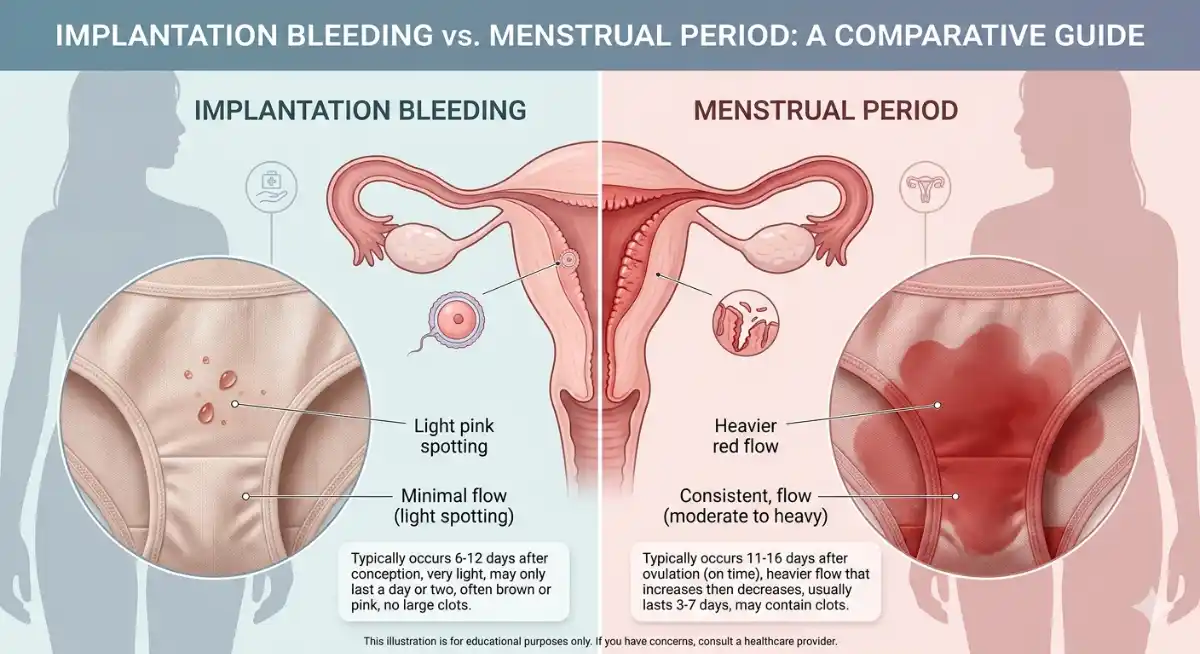
difference between implantation bleeding and a menstrual period is essential for anyone tracking fertility, trying to conceive, or simply monitoring reproductive health. These two types of bleeding can appear similar at first glance, but they have distinct characteristics in timing, color, flow, and associated symptoms. In this comprehensive guide, we break down every important detail to help clearly identify what your body may be signaling.
What Is Implantation Bleeding?
Implantation bleeding occurs when a fertilized egg attaches itself to the lining of the uterus. This process typically happens 6–12 days after ovulation, during the early stages of pregnancy.
Unlike a regular period, implantation bleeding is light, short-lived, and often goes unnoticed. It is considered one of the earliest signs of pregnancy and may be accompanied by subtle symptoms such as mild cramping or spotting.
Key Features of Implantation Bleeding
- Light spotting rather than heavy flow
- Pink or light brown color
- Lasts a few hours to 2–3 days
- Occurs before expected period date
- Minimal or no clotting
What Is a Menstrual Period?
A menstrual period is part of the natural monthly cycle in which the uterus sheds its lining when pregnancy does not occur. This results in heavier bleeding that lasts several days.
Periods are influenced by hormonal fluctuations and are often accompanied by noticeable physical and emotional symptoms.
Key Features of a Period
- Moderate to heavy bleeding
- Bright red to dark red color
- Lasts 3–7 days
- Includes clots and tissue
- Accompanied by cramps, fatigue, and mood changes
Timing Differences: Implantation Bleeding vs Period
One of the most reliable ways to distinguish between implantation bleeding and a period is timing.
Implantation Bleeding Timing
- Occurs 6–12 days after ovulation
- Usually happens before the expected period
- Appears earlier than your menstrual cycle
Menstrual Period Timing
- Occurs around day 28 of the cycle (or your regular cycle length)
- Follows ovulation by about 14 days
- Arrives on schedule unless delayed
Flow and Intensity Comparison
The flow intensity is a major differentiator.
Implantation Bleeding Flow
- Extremely light spotting
- Does not require heavy sanitary products
- Does not increase over time
Menstrual Flow
- Starts light but becomes heavier over 1–2 days
- Requires pads, tampons, or menstrual cups
- Flow gradually decreases after peak days
Color Differences: What to Look For
The color of the bleeding can provide strong clues.
Implantation Bleeding Color
- Light pink
- Brownish tint
- Indicates older blood or minimal bleeding
Period Blood Color
- Bright red at the start
- May turn dark red or brown toward the end
- Often includes thicker consistency
Duration: How Long Does It Last?
Duration is another critical factor when comparing both.
Implantation Bleeding Duration
- Typically a few hours to 2–3 days
- Stops quickly without progression
Menstrual Period Duration
- Lasts 3–7 days
- Follows a pattern: light → heavy → light
Cramping and Physical Symptoms
Both implantation and periods can cause cramping, but the intensity and nature differ significantly.
Implantation Cramping
- Mild and short-lived
- Feels like light pulling or tingling
- Not persistent
Menstrual Cramps
- Moderate to severe pain
- Can last for several days
- Often radiates to the lower back and thighs
Clotting: A Clear Indicator
Clotting is rarely associated with implantation bleeding.
Implantation Bleeding
- No clots
- Very thin and light
Menstrual Period
- May contain blood clots
- Heavier consistency with uterine tissue
Hormonal Signals and Pregnancy Signs
Implantation bleeding is often accompanied by early pregnancy symptoms, while periods signal the absence of pregnancy.
Signs Associated with Implantation Bleeding
- Breast tenderness
- Fatigue
- Nausea
- Increased sensitivity to smells
- Basal body temperature remains elevated
Signs Associated with a Period
- Bloating
- Mood swings
- Acne breakouts
- Food cravings
- Lower back pain
Can Implantation Bleeding Be Mistaken for a Period?
Yes, many individuals mistake implantation bleeding for a light period, especially if they are not actively tracking ovulation or pregnancy signs. However, the key differences in flow, duration, and timing usually make it distinguishable upon closer observation.
When to Take a Pregnancy Test
If you suspect implantation bleeding, timing your test correctly is crucial.
- Wait at least 3–5 days after spotting stops
- For accurate results, test after a missed period
- Use a high-sensitivity pregnancy test
Testing too early may result in a false negative, as pregnancy hormones may not yet be detectable.
When to Consult a Doctor
While both implantation bleeding and periods are normal, certain signs require medical attention:
- Heavy bleeding with severe pain
- Bleeding lasting longer than 7 days
- Unusual color or odor
- Dizziness or fainting
These symptoms could indicate underlying conditions that need evaluation.
Quick Comparison Table
| Feature | Implantation Bleeding | Menstrual Period |
|---|---|---|
| Timing | Before expected period | On cycle schedule |
| Flow | Light spotting | Moderate to heavy |
| Color | Pink or brown | Bright to dark red |
| Duration | Few hours to 2–3 days | 3–7 days |
| Clots | None | Common |
| Cramps | Mild | Moderate to severe |
| Pregnancy Indicator | Yes | No |
Final Thoughts: Understanding Your Body Signals
Recognizing the key differences between implantation bleeding and a period empowers better reproductive awareness and timely decision-making. By paying attention to timing, flow, color, and symptoms, it becomes easier to interpret what your body is communicating.
Consistent cycle tracking and awareness of changes provide deeper insights into your health, whether you are planning a pregnancy or simply staying informed.