 thebravewritingcompany@gmail.com
Understanding menstrual blood colors helps women identify hormonal shifts, health signals, and reproductive patterns with confidence today.
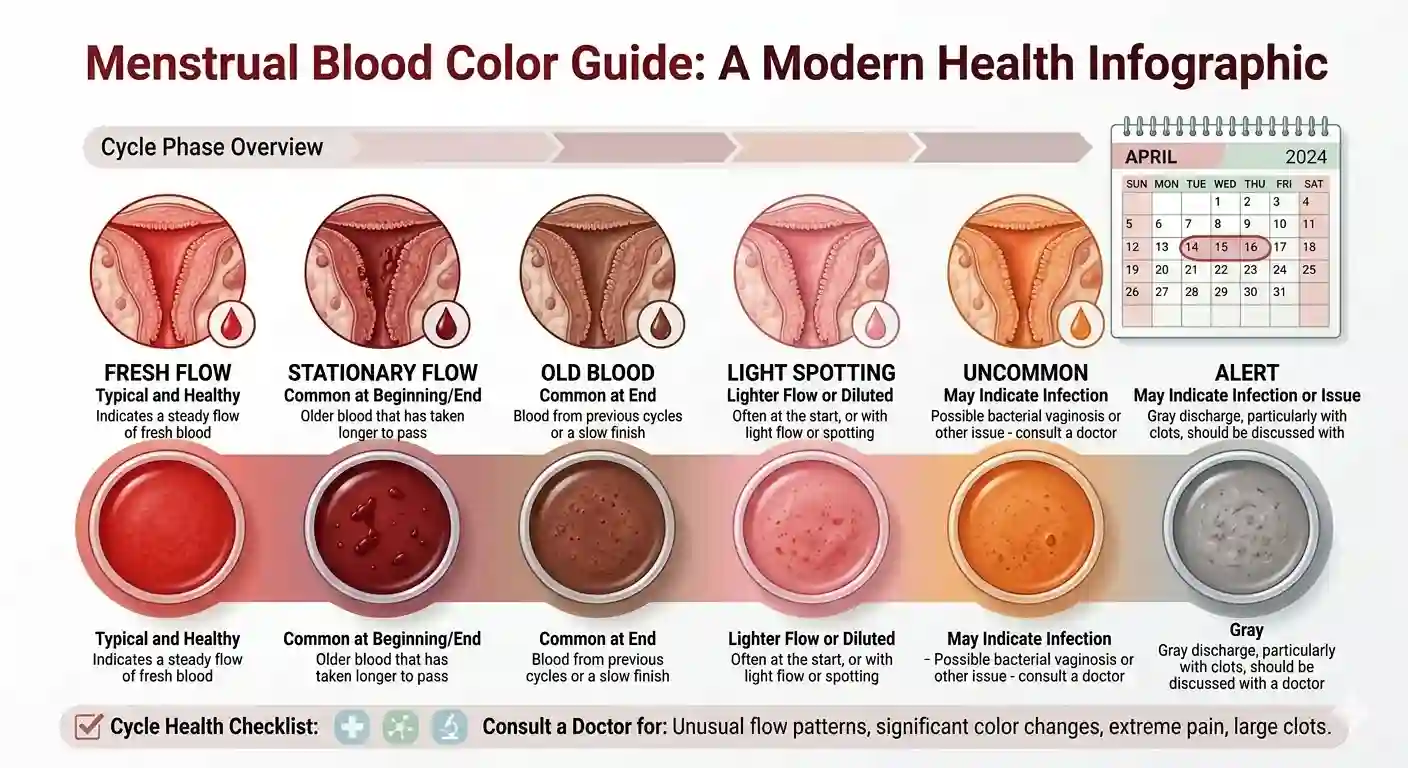
Menstrual health awareness has evolved significantly in 2026, with experts emphasizing that the color of period blood is a powerful indicator of overall reproductive health. From bright red to dark brown and even unusual shades like orange or gray, each color tells a unique story about what’s happening inside the body.
Bright Red Blood: A Sign of Fresh Flow
Bright red menstrual blood is often considered the most “normal” and healthy color during periods. It typically appears at the beginning of the cycle when the flow is fresh and steady.
This color indicates that the blood is moving quickly out of the uterus without much delay, meaning there is minimal oxidation. Women experiencing bright red blood usually have a consistent and well-regulated menstrual cycle.
However, if bright red bleeding becomes excessively heavy or prolonged, it may signal underlying issues such as hormonal imbalance or fibroids, and medical consultation is advised.
Dark Red or Brown Blood: Older Blood Leaving the Body
Dark red, brown, or even blackish blood is commonly seen at the beginning or end of a period. This color appears because the blood has taken longer to exit the body, allowing it to oxidize.
In 2026, gynecologists emphasize that this is completely normal in most cases and does not indicate a problem. Brown discharge before or after periods is especially common and usually harmless.
However, if accompanied by a strong odor or unusual pain, it could indicate infection and should be checked by a healthcare professional.
Pink Blood: Hormonal Fluctuations at Play
Pink-colored menstrual blood often appears lighter and diluted. It can occur due to lower estrogen levels, especially at the start or end of a cycle.
This shade may also appear after exercise or during lighter periods. In some cases, pink spotting can indicate:
- Ovulation spotting
- Early pregnancy signs
- Nutritional deficiencies
Experts in 2026 highlight that frequent pink periods may require hormonal evaluation, especially if cycles become irregular.
Orange Blood: Possible Infection Warning
Orange-colored menstrual blood can be a mix of blood and cervical fluid, but it may also be a warning sign.
Doctors warn that orange discharge combined with a foul smell or itching could indicate infections, such as bacterial or sexually transmitted infections.
Early diagnosis is key, and women are encouraged to seek medical advice promptly if symptoms persist.
Gray Blood: A Serious Health Alert
Gray menstrual blood is rare but considered a potential sign of infection or miscarriage.
Medical professionals strongly advise that gray discharge should never be ignored, especially if it is accompanied by:
- Fever
- Severe pain
- Unusual vaginal odor
In 2026, increased awareness campaigns stress that early detection can prevent serious complications.
Clots in Menstrual Blood: What Do They Mean?
Blood clots during menstruation are common, especially during heavier days. These clots are typically dark red or jelly-like in appearance.
Small clots are normal, but large or frequent clots may indicate:
- Heavy menstrual bleeding (menorrhagia)
- Hormonal imbalance
- Underlying uterine conditions
Healthcare providers recommend tracking clot size and frequency to identify patterns and potential concerns.
When to Seek Medical Help
While variations in menstrual blood color are often normal, certain signs require immediate attention:
- Persistent unusual colors (gray or orange)
- Extremely heavy bleeding
- Severe cramps or pain
- Foul-smelling discharge
In 2026, digital health tools and period tracking apps have made it easier for women to monitor changes and seek timely medical advice.
The Growing Importance of Menstrual Awareness in 2026
With the rise of health education and technology, women are now more informed than ever about their bodies. Experts stress that understanding menstrual blood color is a simple yet effective way to monitor reproductive health.
Regular tracking, combined with awareness of symptoms, empowers women to detect potential issues early and maintain overall well-being.