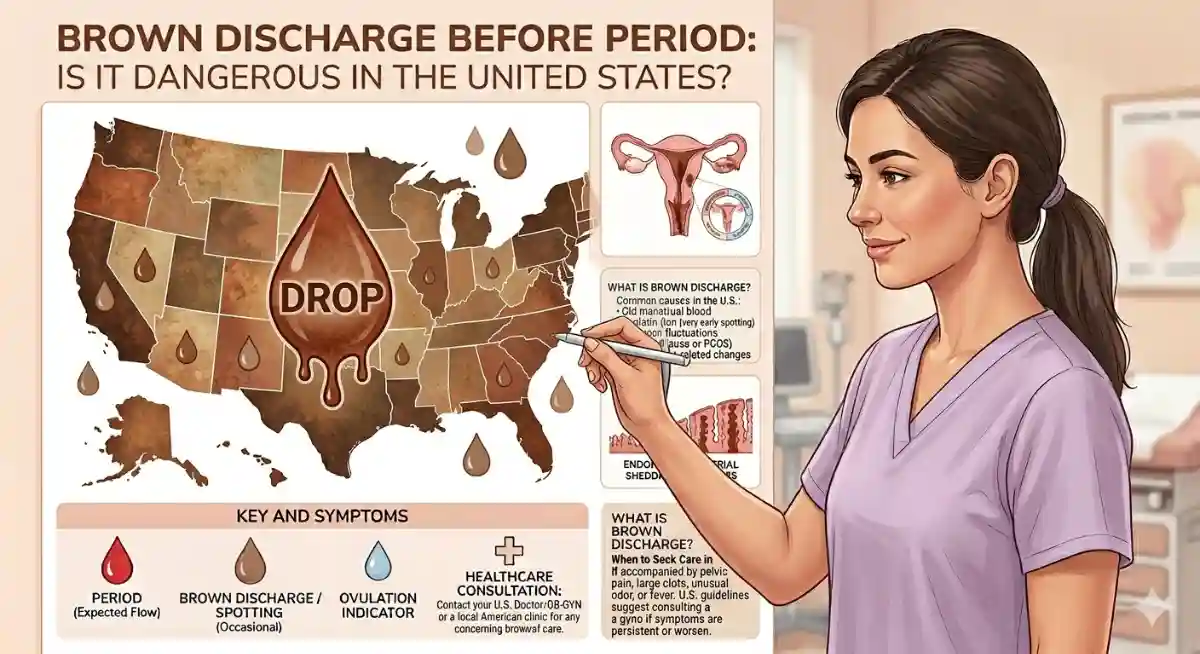
Brown discharge before a period is a common experience for many individuals, yet it often causes unnecessary concern and anxiety. We recognize that the color, timing, and consistency of vaginal discharge can feel alarming when it deviates from the usual pattern. However, in most cases, brown discharge is not dangerous and is simply a natural part of the menstrual cycle.
The brown color typically indicates older blood that has oxidized. Instead of fresh, bright red blood, this discharge has taken longer to exit the body, resulting in a darker appearance. This is especially common in the days leading up to menstruation when the uterus begins shedding its lining slowly.
What Causes Brown Discharge Before a Period?
1. Hormonal Fluctuations
Hormones regulate the menstrual cycle, and even minor imbalances can result in early spotting or brown discharge. Fluctuations in estrogen and progesterone levels may cause the uterine lining to shed prematurely.
2. Ovulation Spotting
Some individuals experience light spotting during ovulation, which can appear brown if the blood takes time to leave the body. This usually occurs around the middle of the cycle.
3. Birth Control Usage
Hormonal contraceptives, including pills, patches, and IUDs, often lead to irregular spotting or brown discharge, especially during the first few months of use. This is a normal adjustment phase.
4. Delayed Menstrual Flow
When the menstrual flow begins slowly, the first discharge may appear brown rather than red. This is simply older blood exiting the uterus.
5. Stress and Lifestyle Factors
High stress levels, sudden weight changes, or intense physical activity can disrupt hormonal balance, leading to unexpected brown discharge before periods.
Is Brown Discharge Dangerous?
In most cases, brown discharge before a period is completely harmless. It is typically a sign that your body is preparing for menstruation. However, we emphasize the importance of recognizing when it may indicate an underlying issue.
When It Is Not Dangerous
- Occurs 1–3 days before your period
- No unusual odor
- No itching or irritation
- Consistent with your normal cycle pattern
When It May Be Concerning
Although rare, brown discharge can sometimes signal a medical condition. It is important to pay attention to accompanying symptoms.
Medical Conditions Linked to Brown Discharge
1. Infections
Certain infections, including bacterial vaginosis or sexually transmitted infections (STIs), may cause brown discharge along with:
- Foul odor
- Burning sensation
- Pelvic discomfort
2. Polycystic Ovary Syndrome (PCOS)
Individuals with PCOS may experience irregular cycles and spotting, including brown discharge due to hormonal imbalance.
3. Endometriosis
This condition can cause abnormal bleeding patterns, including brown discharge before or after periods, often accompanied by severe cramps.
4. Early Pregnancy or Implantation Bleeding
Brown discharge can sometimes occur due to implantation bleeding, which happens when a fertilized egg attaches to the uterine lining. This is usually light and short-lived.
5. Cervical or Uterine Issues
In rare cases, brown discharge may be linked to polyps, fibroids, or cervical abnormalities, particularly if it occurs frequently or unpredictably.
Brown Discharge and Pregnancy Concerns
We understand that many individuals worry about pregnancy when noticing unusual discharge. Brown discharge before a missed period may indicate implantation, but it is not a definitive sign. If pregnancy is suspected, taking a test after a missed period is the most reliable approach.
If brown discharge occurs during pregnancy, especially with pain or heavy bleeding, immediate medical attention is necessary.
How Common Is Brown Discharge in the United States?
In the United States, brown discharge before menstruation is extremely common and affects a large percentage of menstruating individuals at some point in their lives. Healthcare providers widely consider it a normal variation of menstrual health, especially when it occurs occasionally and without other symptoms.
How to Manage Brown Discharge Safely
1. Track Your Menstrual Cycle
Keeping a record of your cycle helps identify patterns and determine whether the discharge is normal for you.
2. Maintain Proper Hygiene
Use gentle, unscented products to avoid irritation. Avoid douching, as it can disrupt the natural vaginal environment.
3. Manage Stress Levels
Stress reduction techniques such as yoga, meditation, and proper sleep can help regulate hormones and minimize irregular discharge.
4. Review Birth Control Options
If hormonal contraceptives are causing persistent spotting, consult a healthcare provider to explore alternatives.
5. Stay Hydrated and Maintain a Balanced Diet
Nutrition plays a key role in hormonal balance. A diet rich in iron, vitamins, and healthy fats supports reproductive health.
When to See a Doctor
While brown discharge is usually harmless, we recommend seeking medical advice if you experience:
- Persistent or heavy discharge
- Strong, unpleasant odor
- Severe abdominal or pelvic pain
- Irregular cycles for several months
- Bleeding after intercourse
- Symptoms of infection
Early evaluation ensures that any underlying condition is diagnosed and treated promptly.
Prevention Tips for Healthy Menstrual Cycles
- Maintain a consistent sleep schedule
- Avoid excessive caffeine and processed foods
- Exercise regularly but avoid overexertion
- Practice safe sex to prevent infections
- Schedule routine gynecological check-ups
Final Thoughts on Brown Discharge Before Period
Brown discharge before a period is rarely dangerous and is often a natural sign of your body preparing for menstruation. Understanding the causes and recognizing normal patterns can help reduce anxiety and promote confidence in your reproductive health.
We emphasize that while most cases are harmless, staying informed and attentive to your body is essential. If anything feels unusual or persistent, consulting a healthcare professional is always the best course of action.